Hardwood, LVP or Tile for a Middle Georgia Home
Middle Georgia's humidity, soil and summers change which flooring behaves best, and which rooms it belongs in.
October 20, 2026 · 4 min read
People shopping for a new floor in Warner Robins tend to start with the look, and that is a fair place to begin. But hardwood, luxury vinyl plank and tile behave differently once they are living in a Middle Georgia house, with its humid summers, damp springs, red clay yards that get tracked inside and pets that treat floors as a racetrack. It is worth thinking about how each one handles real life before you fall in love with a sample.
Humidity is the thing Georgia does to floors
Solid hardwood takes up moisture from the air and gives it back, so it expands in the humid months and shrinks in the dry ones. In a house with steady air conditioning that movement is small, and a well-installed floor handles it for years. Where the indoor humidity swings widely, or a moisture source sits under the floor, boards can cup, gap or crown. LVP is far less affected by humidity, though it does react to heat, and long afternoons of sun through a big window or glass door can make it move. Tile is not bothered by humidity at all, and many people like the cool feel of it underfoot through a Georgia summer.
Slab or crawlspace, in general terms
What the house sits on changes the options. Many homes in this area are built on a concrete slab. A slab can hold moisture, and a floor going over it has to be chosen with that in mind. Solid hardwood is generally not nailed to concrete, so slab houses lean toward engineered hardwood, LVP or tile, all of which are better matched to that base. A house over a crawlspace has a wood subfloor, which suits nailed hardwood and also works for LVP and for tile if the floor is stiff enough. The condition of the crawlspace matters, though, because moisture rising from the ground below can reach the underside of the floor.
Pets, kids and everyday wear
Hardwood scratches, and a big dog on a hard floor will leave its mark. The upside is that a hardwood floor can be sanded and refinished, which resets it, so the scratches are not permanent. LVP is built for rough use and shrugs off spills, but a sharp gouge in vinyl cannot be sanded out, only replaced plank by plank. Tile is the toughest against claws and traffic. Its weak point is the grout lines, which need care, and dropped dishes do not fare well on it. None of the three is wrong for a busy house. It is more about which kind of wear you can live with.
Kitchens and bathrooms
Water is the deciding factor here. Tile is the natural choice for a bathroom floor and a shower, and the work behind it matters as much as the tile. LVP also does well in baths and laundry rooms because it handles splashes, and it is a popular pick for a kitchen floor that has to flow into the rooms beside it. Hardwood in a kitchen is possible, and plenty of people love it, but it asks for quick wipe-ups and an eye on the dishwasher, the refrigerator line and the sink cabinet, where a slow leak can go unnoticed. Solid hardwood does not belong in a full bathroom.
Putting it together
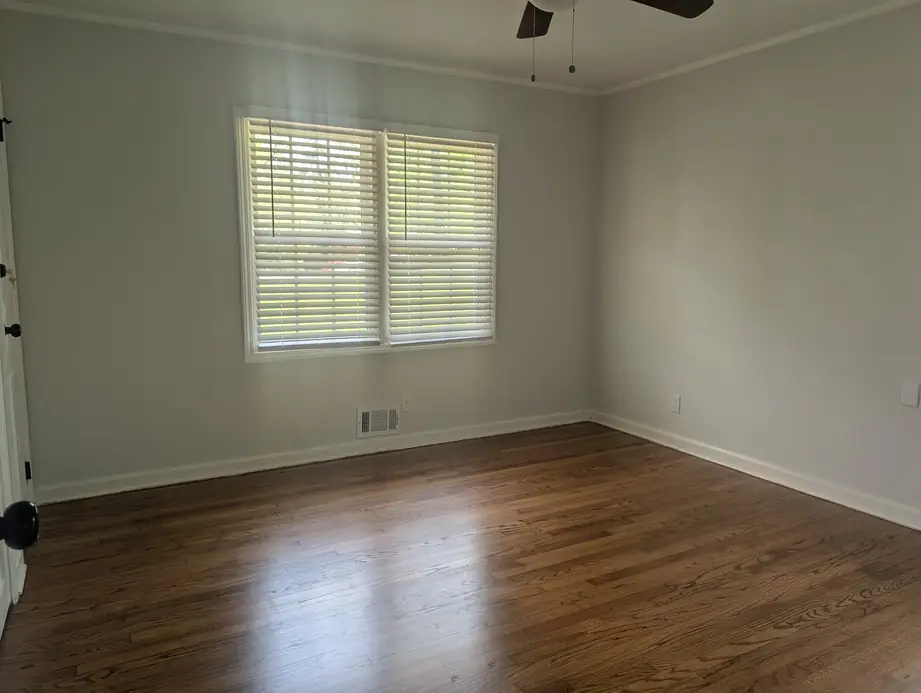
Peter's work covers all three. The photos on this site show a finished hardwood floor in a bright empty room, an installer laying Quick-Step LVP over a stripped subfloor, and a checkerboard tile floor on the diagonal. Here is the short version of how they tend to sort out:
- A slab house with a busy household that wants a forgiving floor: LVP or tile.
- A classic look in living areas, with some seasonal movement you are happy to live with: hardwood.
- Wet rooms such as baths, showers and laundry: tile, with the moisture barrier done correctly behind it.
- One continuous floor from kitchen to hall: LVP, which runs easily across rooms.
These are tendencies, not rules. A house over a crawlspace that is dry and well vented can take hardwood beautifully, and a tile floor in a living room can feel just right. Mixed floors are normal too. Many homes have tile in the wet rooms and a plank floor everywhere else, with clean transitions where they meet. The threshold between the two is worth planning early, because the two materials rarely have the same thickness and the doorway is where that shows.
If you are unsure which way to go, text Peter a few photos of the rooms at (478) 334-9344, or call. Estimates are free, and it helps to say whether the house sits on a slab or over a crawlspace when you write.
Master Flooring Installation & Home Repair, (478) 334-9344
Call (478) 334-9344More articles
What Goes Behind the Tile in a Shower That Lasts
A tiled shower is judged by its surface, but it lives or dies on the layers behind the tile.
Pulling Up Carpet: The Subfloor Check Before LVP or Laminate
The floor under your carpet decides how the next floor behaves, which is why the check happens before a single plank goes down.