When Another Contractor Got It Wrong: How a Fix-It Job Is Assessed
Fixing someone else's work starts with an honest look at what is underneath, not a promise before anyone has seen it.
October 20, 2026 · 4 min read
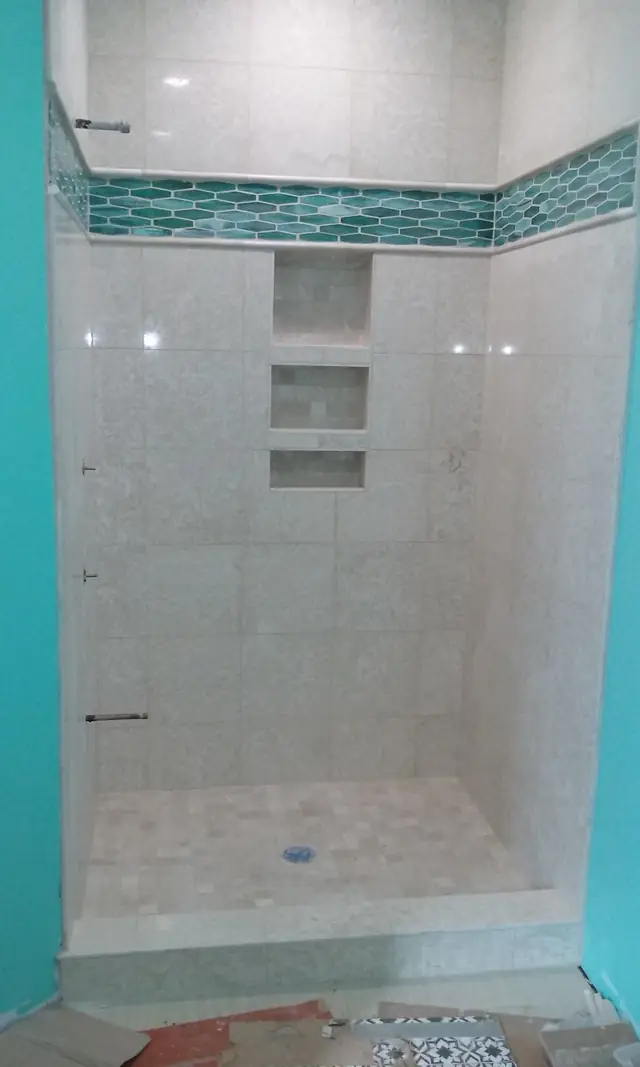
Lisa Parkins left a five-star Google review for Peter that is short on tile talk and long on relief. She wrote that he was a blessing to her household in fixing someone else's mistakes, that he was always on time, and that he did what he promised. Lots of homeowners in Houston County know that feeling from the other side: a job that was started with good intentions and ended with a floor, a shower or a wall that is wrong.
Why a fix-it job is not a normal estimate
A normal estimate starts from a blank room. A repair starts with someone else's decisions already built into the house. Part of the job is paid for, part of the material is installed, and the homeowner is understandably cautious about trusting anyone with the rest. Good work on a job like this begins with a plain assessment of what is there, not with a promise made before anyone has seen it.
Step one: photos and a straight account
Most of these conversations start by text. Send photos of the whole room, then close-ups of the worst parts: the corners, the edges, the places where the floor changes material, the seams that have opened up. If the contractor left material behind, photograph the box labels and any leftover tile or planks, because the product name tells a lot about what was meant to happen. Then say what happened in plain words. What was agreed, what has been paid, where the work stopped and what the problem looks like to you. You do not need to assign blame. The facts are enough.
Step two: a look in person
Photos tell a lot, but not everything. Many problems sit underneath the surface, and an estimate for this kind of work usually means standing in the room. That means checking whether tile is bonded or hollow by tapping across it, running a straightedge over a floor to find where it is not flat, pressing on walls that feel soft, and looking at how things were fastened and finished. Sometimes it means opening a small area to see what is below the finished surface. That can feel like making a mess of something already damaged, but it is better than guessing.
What can be saved, and what has to come out
The honest answer is that it depends on where the problem is. If it is on the surface, it can often be repaired in place: a section of grout, a trim piece, a patch in drywall, a row of planks that was cut short. If it is in a layer you can only reach by removing what is above it, then what is above it has to come out. A tile floor set on a base that was never flat will not be made right by regrouting. A shower with no moisture barrier behind the tile cannot be fixed from the front.
Salvage matters too. Cabinets, fixtures, glass doors and leftover materials in good condition can often be reused, which keeps a bad situation from becoming a worse one. A tile that was set well but laid out badly is a different conversation from a tile that was set badly, and the assessment keeps those two apart. The goal in every assessment is to take out only what has to go, and to say clearly which category each piece falls into before work begins.
These are the signs that usually point to starting over in an area rather than patching it:
- Tile that sounds hollow across a large area, not just in one or two spots.
- A shower wall that is soft, damp or has a smell that returns after cleaning.
- A floor that is uneven across the whole room, not at one doorway.
- Plank seams that are opening or lifting in many places.
- A missing or damaged moisture barrier behind tile in a wet area.
After the diagnosis: doing what was said
Lisa's review keeps returning to two ideas: being on time and doing what was promised. After a bad experience that counts for more than a clever price. A fix-it job goes better when everyone agrees in plain words what will be done, in what order and when, and when the crew shows up on the day it said it would. Other reviewers mention the same habits from different jobs. Annette Solis noted that Peter cleans up any mess a job creates, and Genell Wright wrote that she was very pleased with her newly tiled shower.
If another contractor left your project wrong or unfinished, text Peter photos at (478) 334-9344, or call. Estimates are free, and the first step is only to look at what is there.
Master Flooring Installation & Home Repair, (478) 334-9344
Call (478) 334-9344More articles
What Goes Behind the Tile in a Shower That Lasts
A tiled shower is judged by its surface, but it lives or dies on the layers behind the tile.
Pulling Up Carpet: The Subfloor Check Before LVP or Laminate
The floor under your carpet decides how the next floor behaves, which is why the check happens before a single plank goes down.